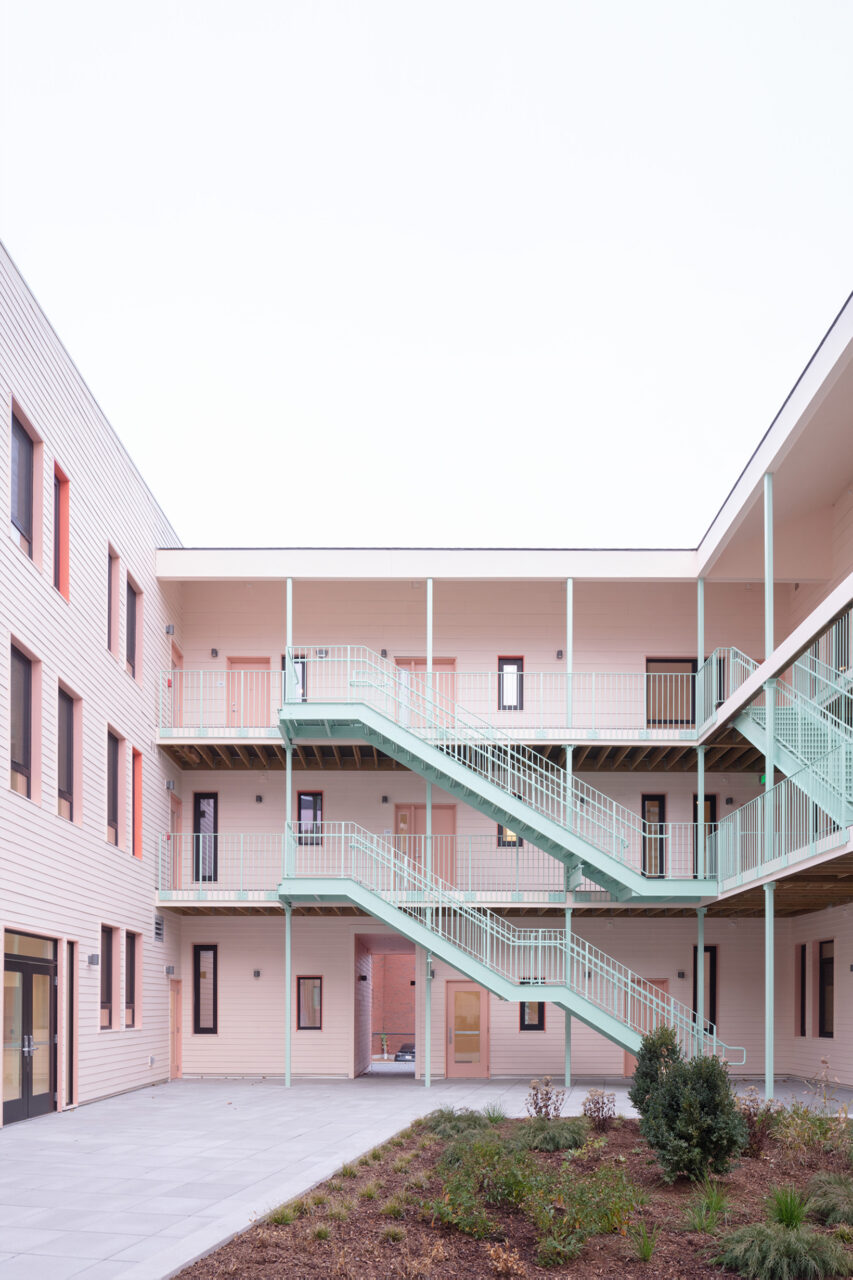
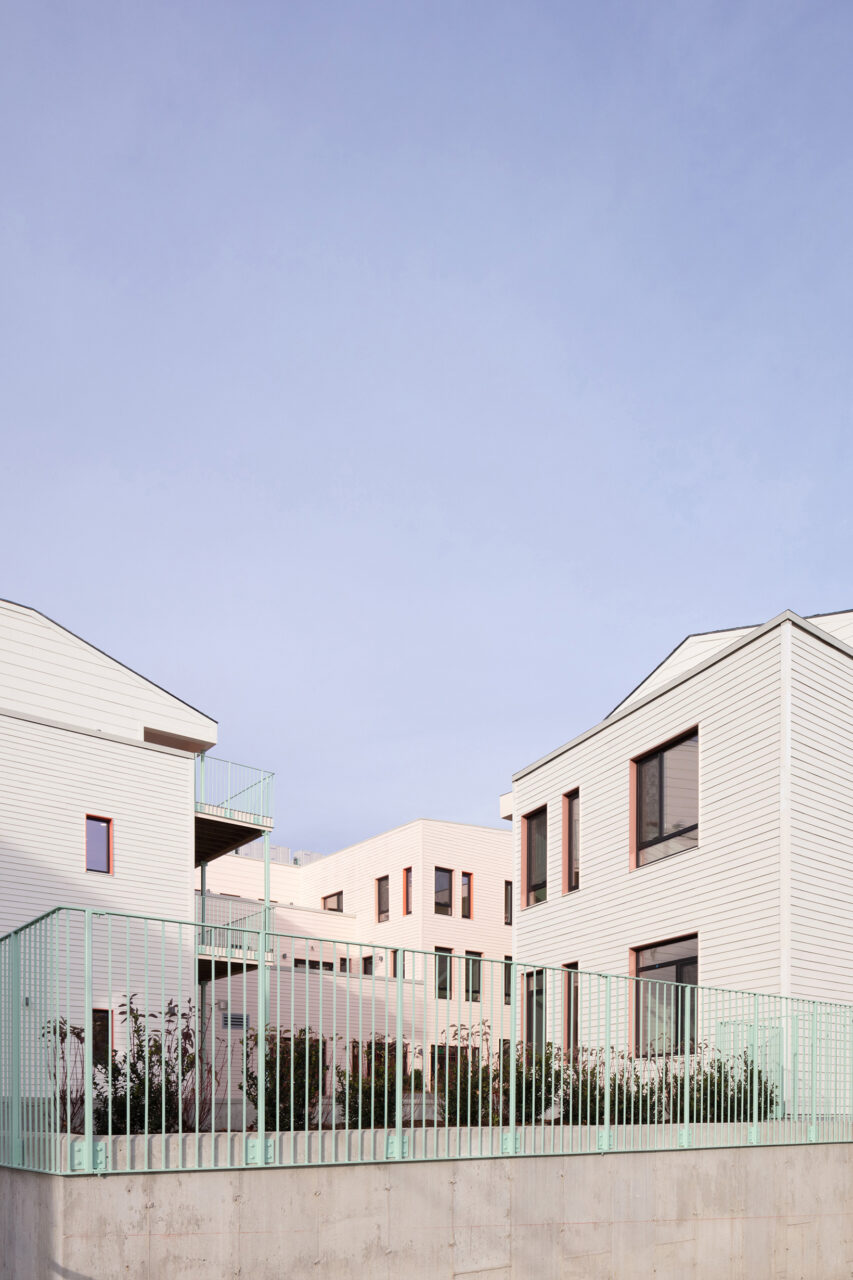
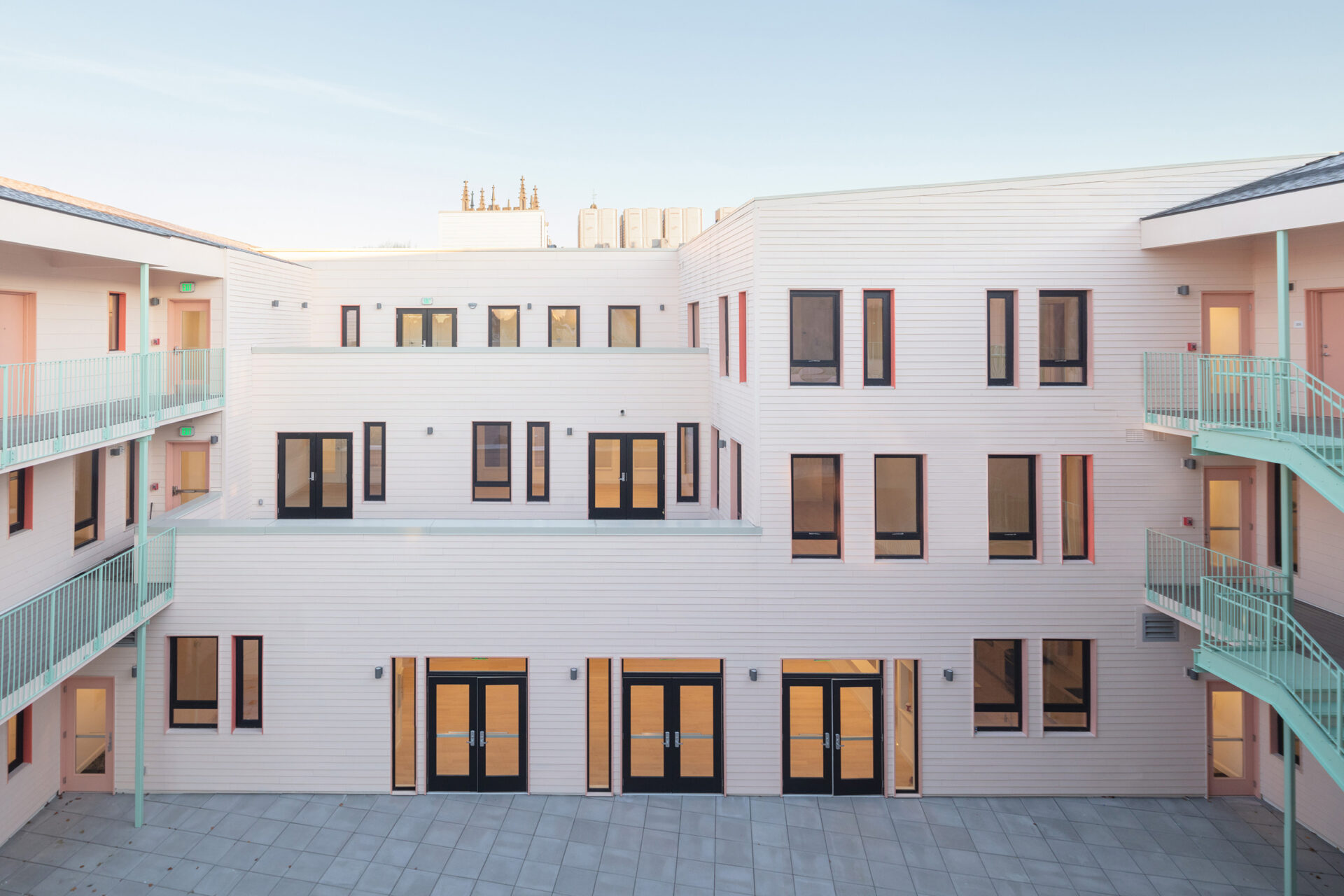
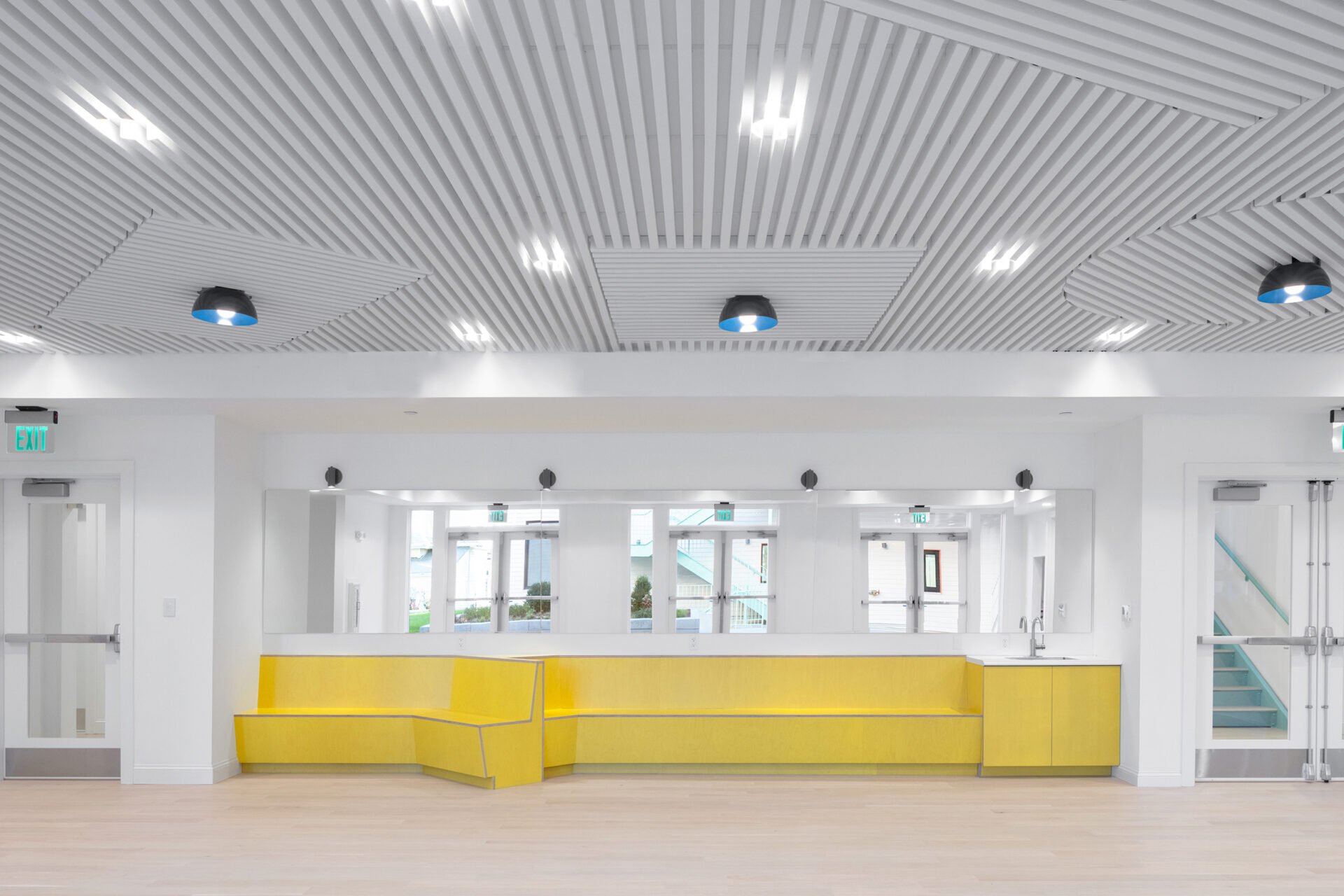
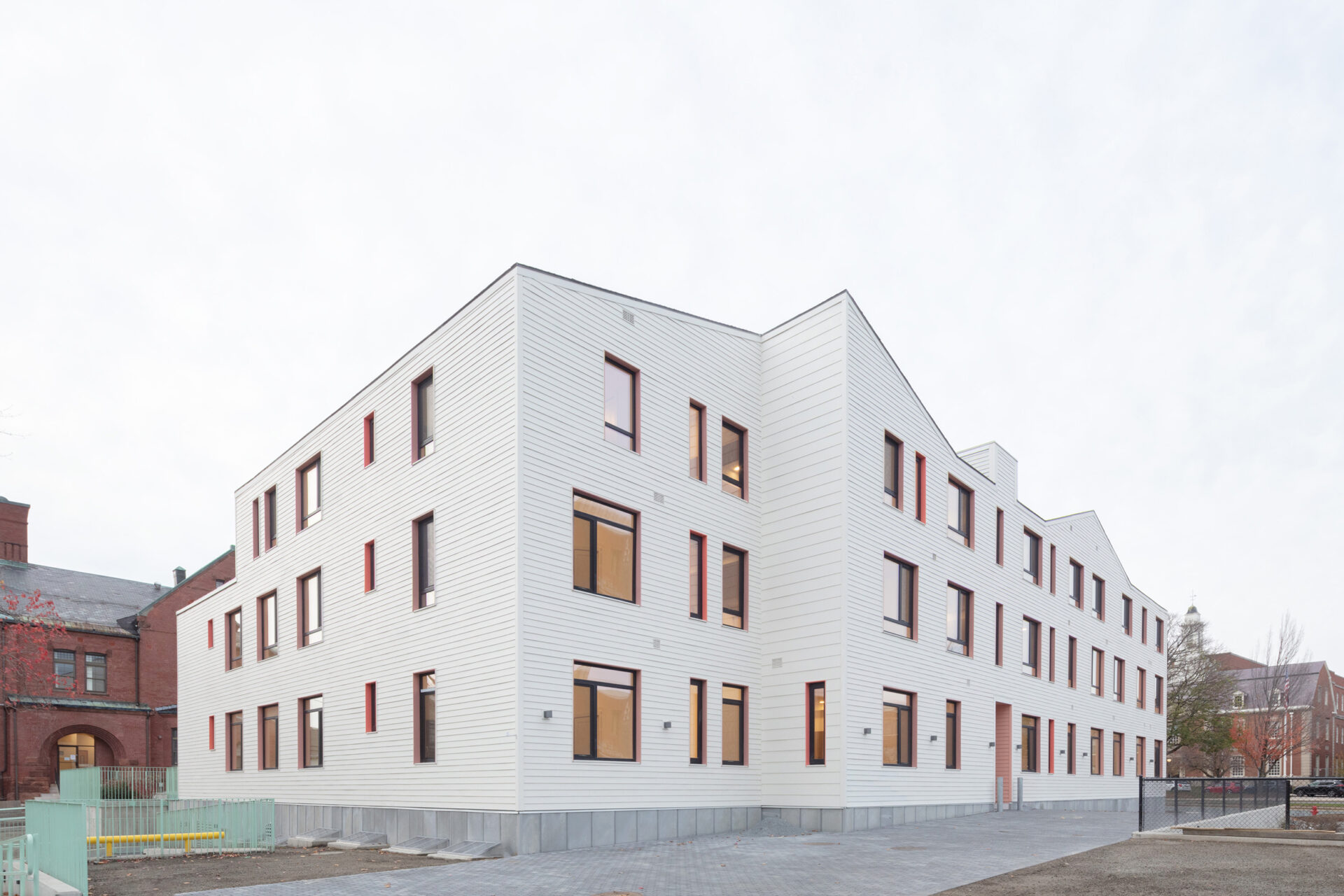
Project overview: Bay State Cohousing is a thirty-unit collective housing complex in Malden, MA, with 5,000 sf of communal space, shared gardens, and plazas. Conceived as a replicable alternative to profit-driven multifamily housing, the project pairs complex form with the customs and comforts of its resident community, reimagining cohousing as a single collective house embedded with thirty individual dwellings. Single-loaded corridors line the courtyard, producing layered thresholds between private and collective life.
The project began in 2016 when a group of self-developing households selected a site near the Orange Line. The architects led an intensive participatory process—programming, visioning, schematic and design development workshops, and value engineering—ensuring every household shaped the design. Reports after each session enabled new members to join seamlessly, reinforcing consensus and collaboration.
Major constraints included a citywide building moratorium and new zoning restrictions that threatened viability. Working with a City Councilor, the architects helped craft Malden’s first Cohousing Zoning Ordinance, permitting greater density and counting rooftop gardens as open space. This advocacy transformed a potential shutdown into a pioneering precedent.
The outcome is a $257/sf wood-frame building with barrier-free corridors, communal dining for 100, terraces, gardens, and spaces for work, recreation, and music. The design reduces energy use 71% below baseline, has new solar panels on the roof, and reduces car dependence.
Lessons learned include the power of participatory design to build resilience against regulatory shifts, the value of aligning form with social comfort, and the capacity of collective housing to produce extended families of choice.
Project location: Malden, Massachusetts
Firm name: French 2D
Completion: 2023
Client: Christine Clements
Jury comments: Wonderful array of public spaces with thoughtful paving, color, and urban landscape elements, including amphitheaters that activate and welcome people. This Boston street reclamation connects buildings and activates public space effectively. The inexpensive, tactical approach on the second site is a great model for other cities to test urban ideas without major investment. Jury appreciated the concept, though more public process in the presentation would strengthen it.
Images/Photographer: Naho Kubota Civil Engineer: Hancock Associates Structural: TF Moran Mechanical: Norian/Siani Engineering Inc. Electrical: Norian/Siani Engineering Inc. Plumbing: Norian/Siani Engineering Inc. Acoustics: Cavanaugh Tocci Landscape: CBA Other Consultants: Linda Neshamkin, AIA, Chris Scotthanson (Urban Cohousing)