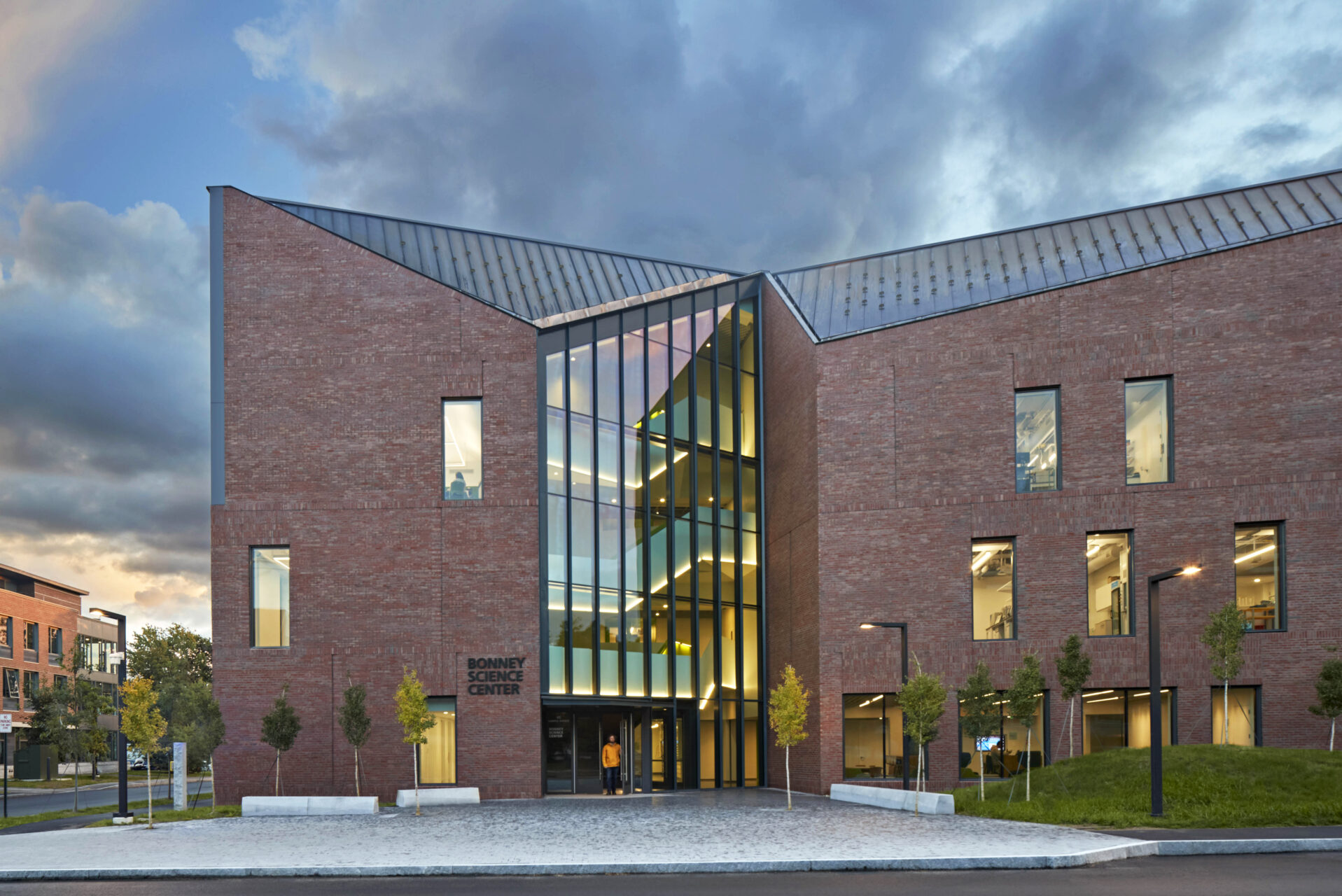
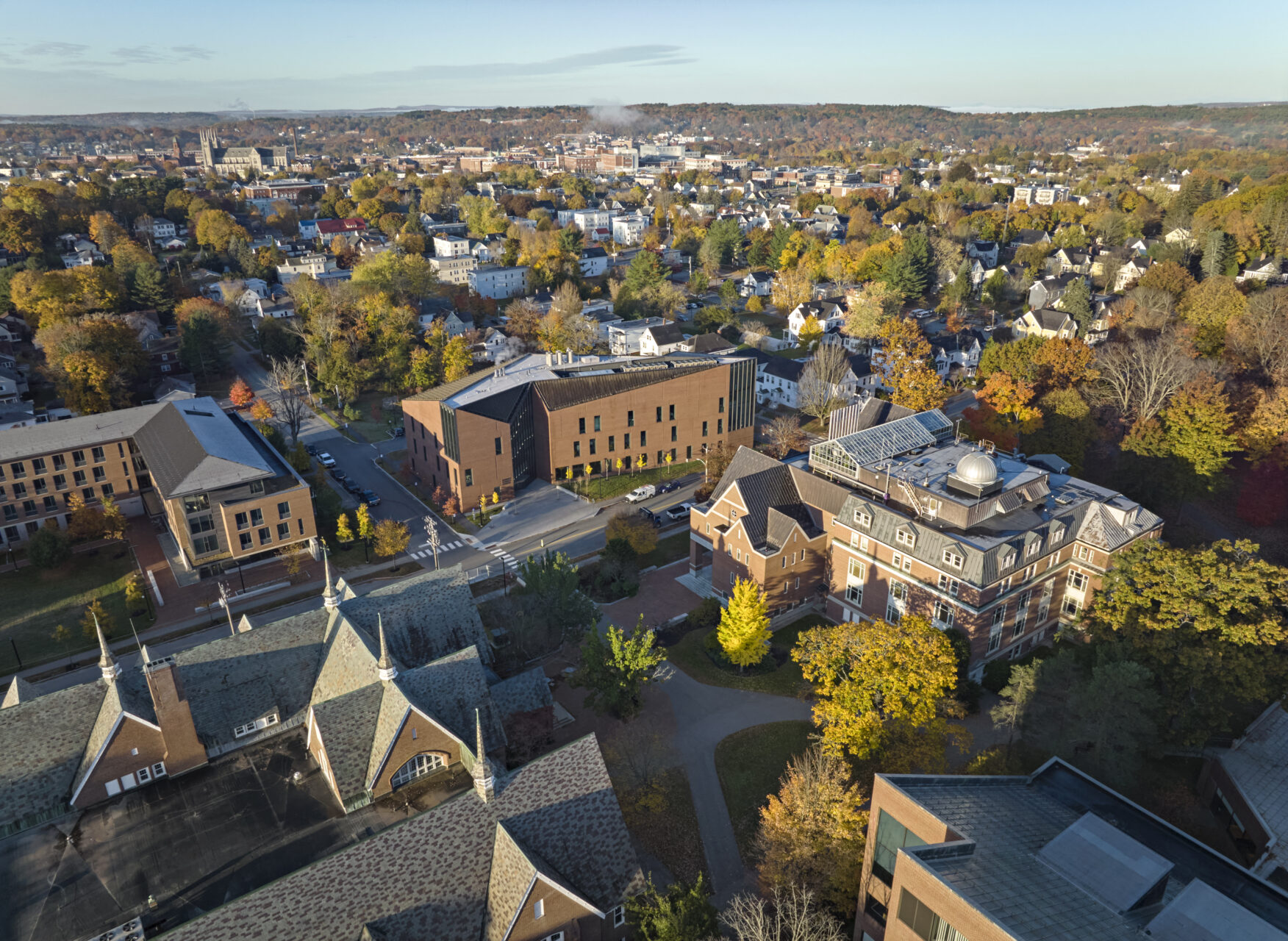
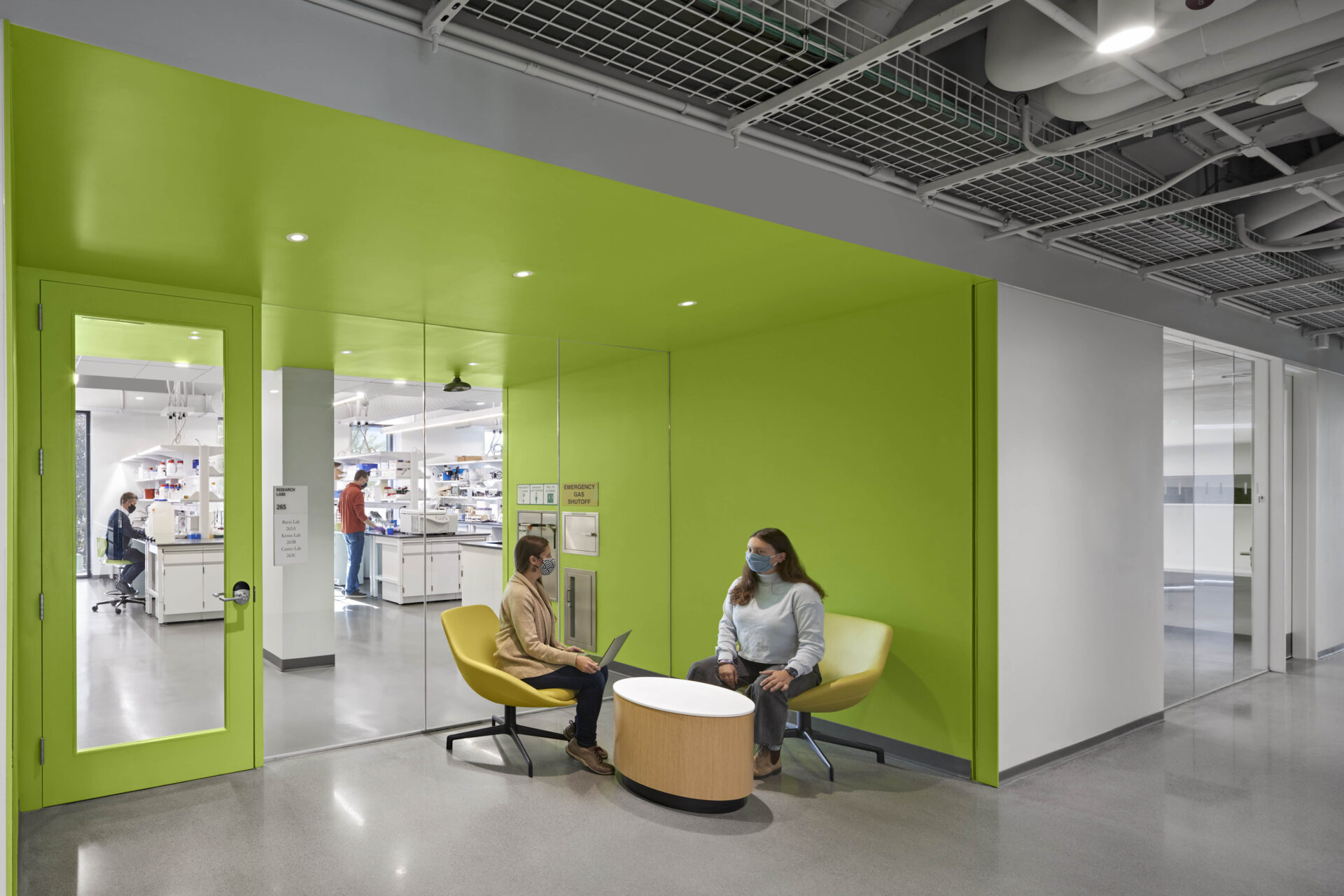
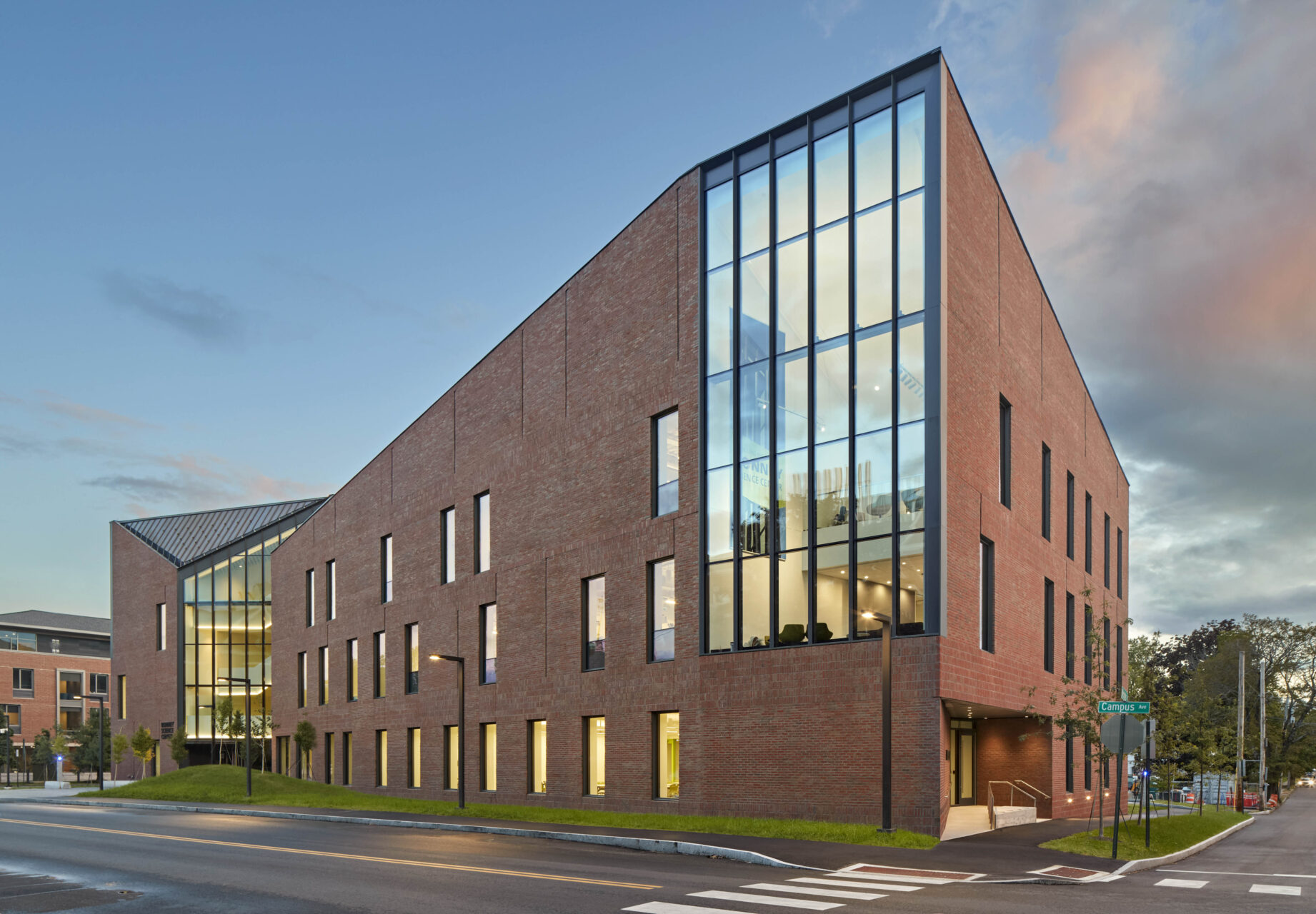
Project overview:Bonney Science Center at this College explores contemporary expression in deep dialogue with the traditional New England academic campus context. Located adjacent to the Historic Quad, the new 65,000 square foot building houses biology, chemistry and neuroscience programs to foster the evolution of science education. Its planning and layout embrace advanced technologies and interdisciplinary collaboration that characterize contemporary pedagogies. The design intuitively guides the entry placement away from the Quad, where it cleaves from the solid form at the terminus of a heavily trafficked pedestrian route; this careful planning acknowledges the adjacent Carnegie Science Center entry and planned future expansion to the west.
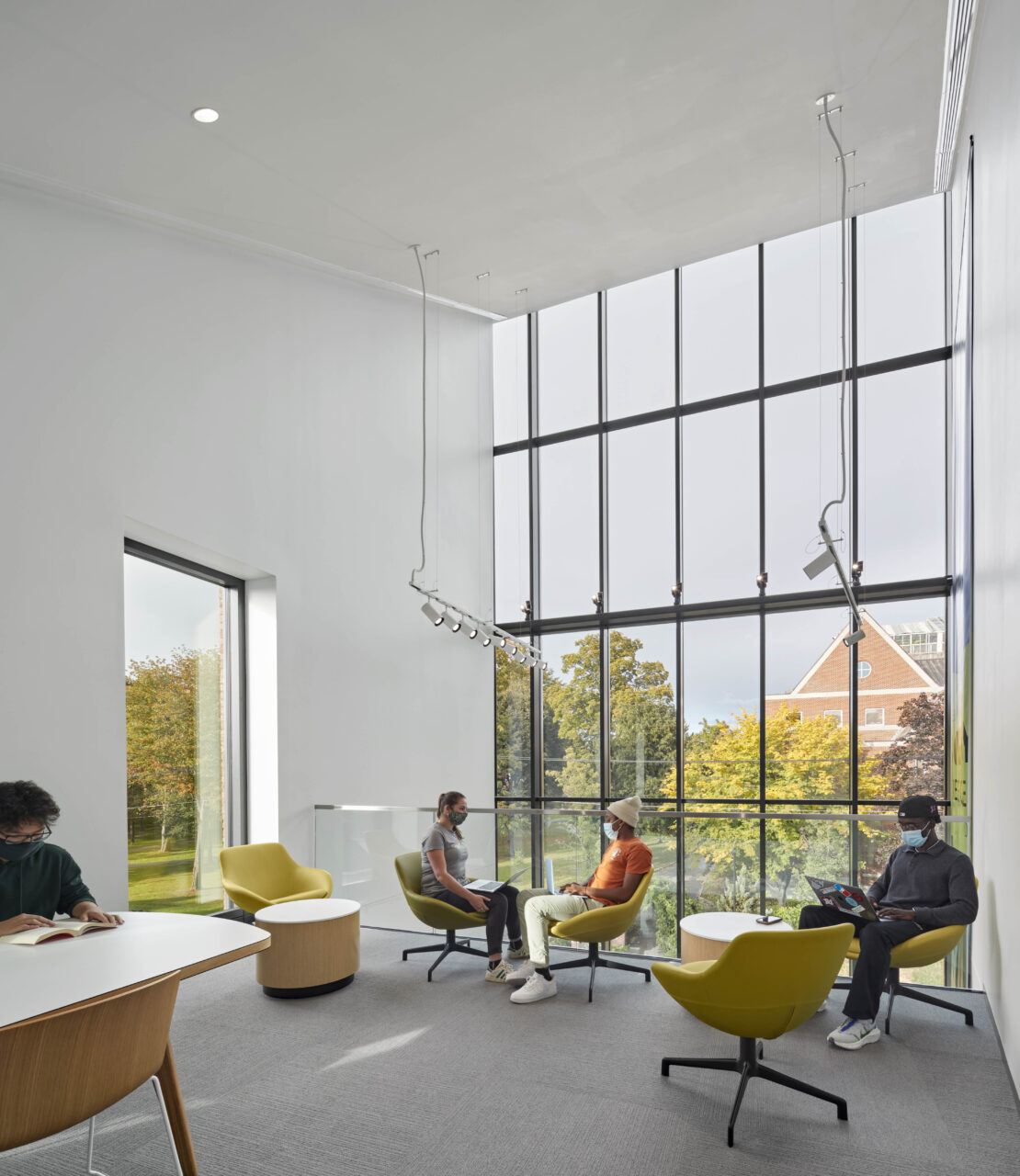
As the first academic building outside of the core campus, the project’s contextual material cues cement its relationship as contemporary kin to a rich heritage, avoiding pastiche imitation. Several sweeping apertures articulate this dynamic mass. Facing the historic quad, the Beacon study space offers an unobstructed view over the campus as a glowing invitation in the long Maine winter evenings. The “notch” of the primary entrance reveals the iconic main stair. Fit snug within a triple height volume, it is a focal point for internal circulation as well as a dynamic form visible from the busy campus approach.
Challenged to achieve more with less, this compact, dynamic and efficient building exemplifies the College’s vision for future generations. Simultaneously rooted in the past and boldly reaching forward, it is a place to build community that actively welcomes all.
Project location: Lewiston, Maine
Firm name:PAYETTE
Completion: 2021
Client: Bates College
Jury comments:A wonderful and seemingly economical solution, the Bonney Science Center smartly addresses historical context with contemporary form and a contemporary use of traditional materials. The building thoughtfully bridges historic campus character with forward-looking STEM pedagogies through dynamic massing, intuitive circulation, and a landmark study space. Deep engagement with students, including first-generation and BIPOC groups, shaped inclusive, non-science spaces that make the building a welcoming campus hub. The compact footprint reflects efficient use of resources, while clear diagrams, strong rationale, and beautifully detailed brick exemplify design excellence and impactful campus transformation.