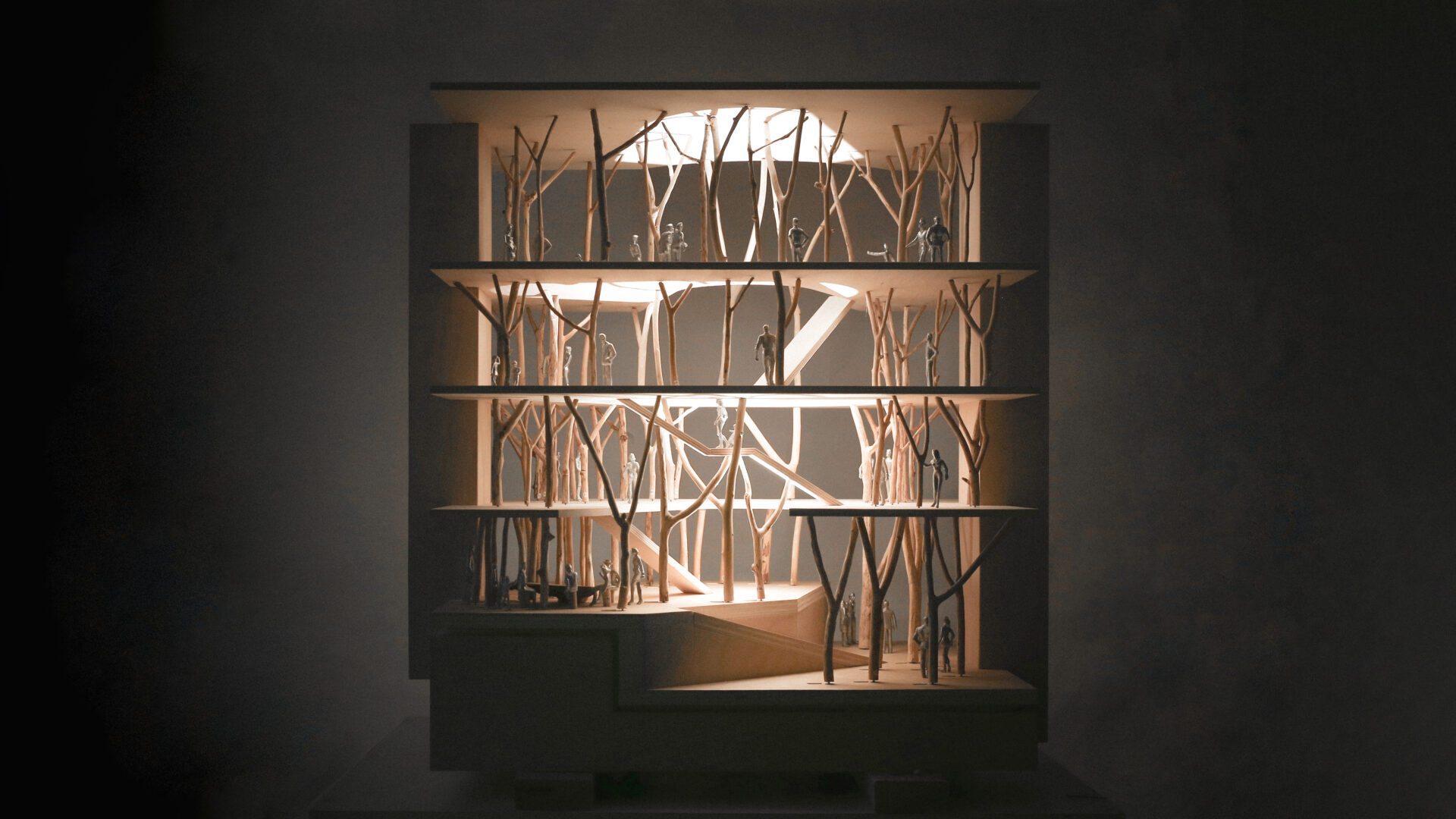
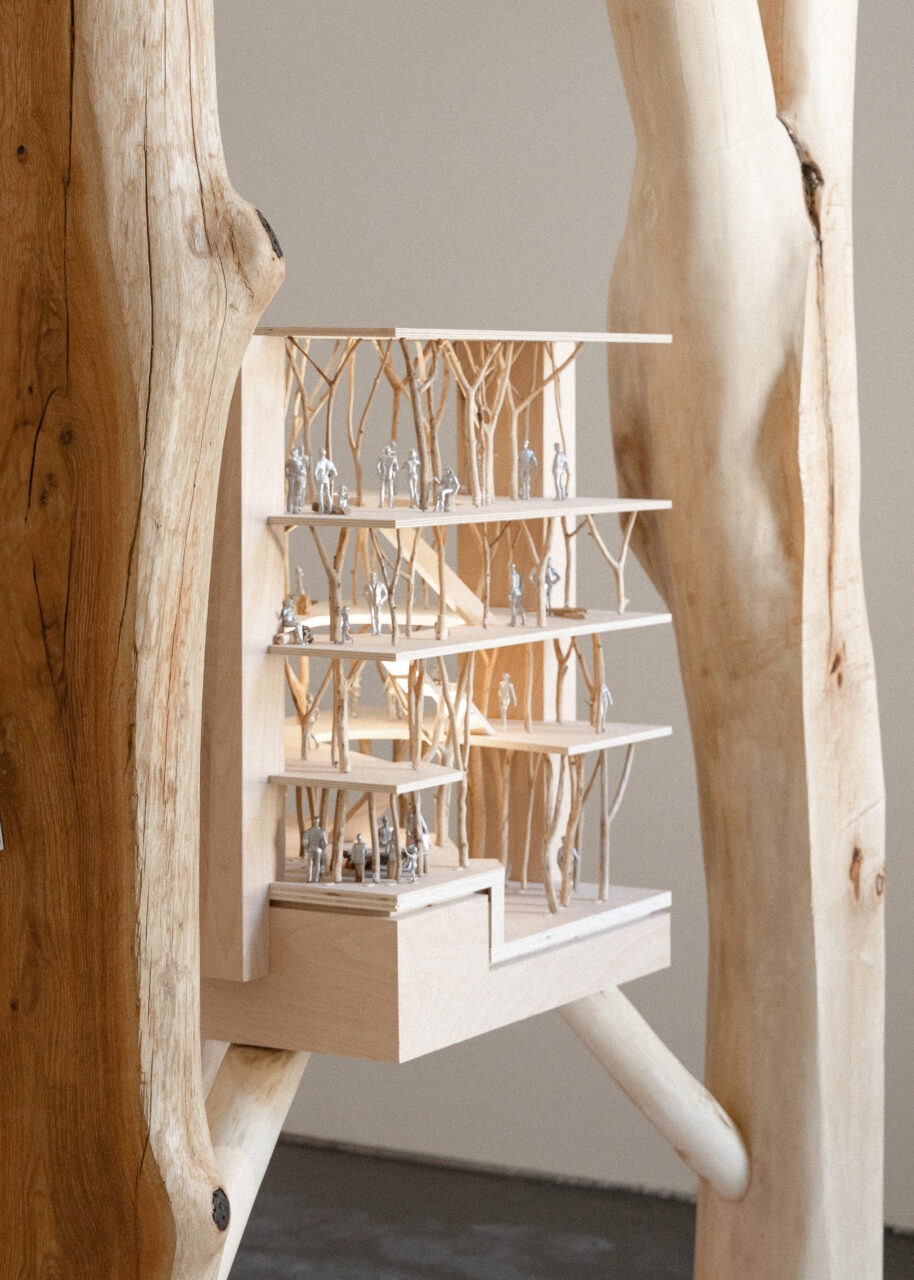
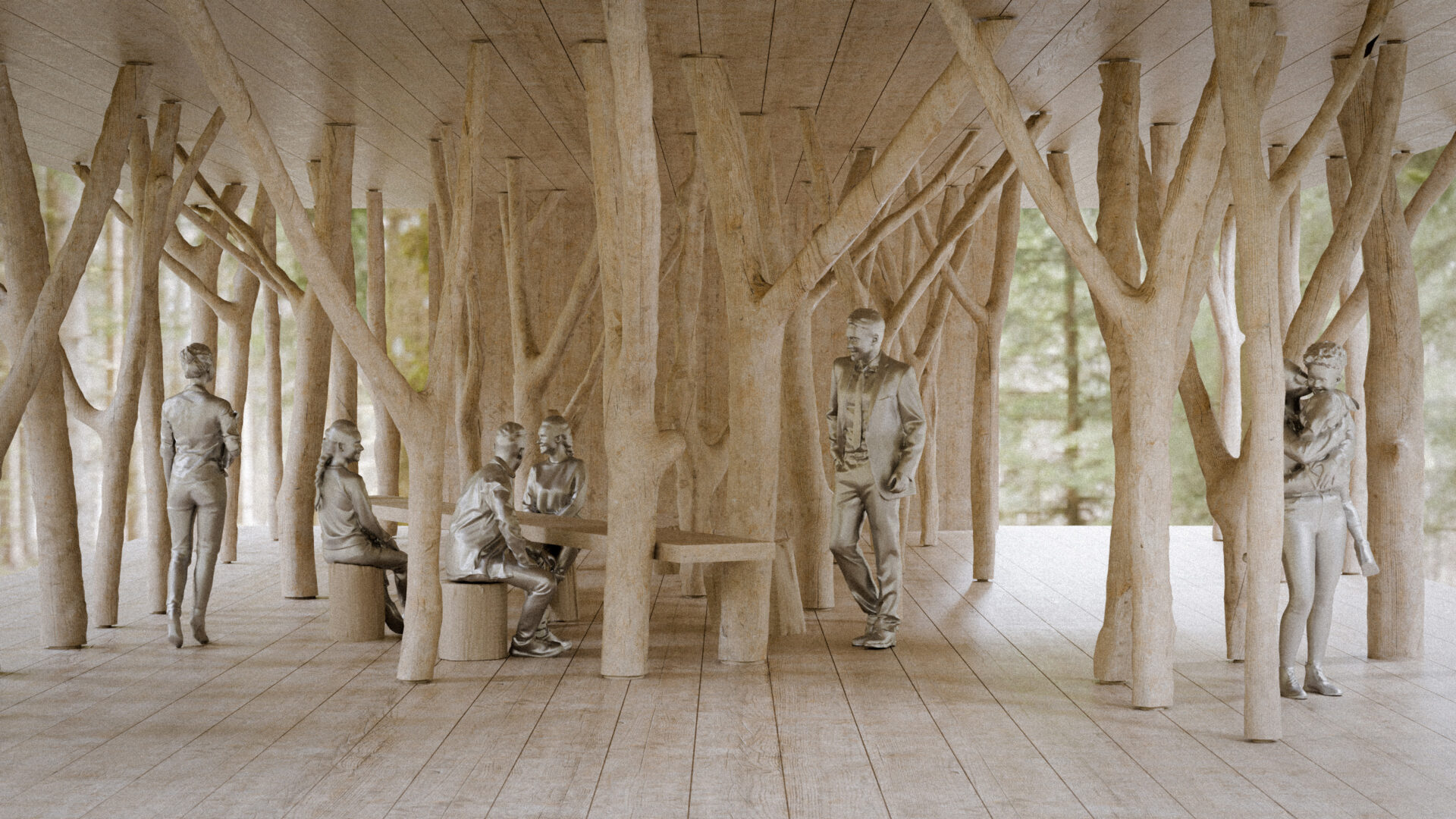
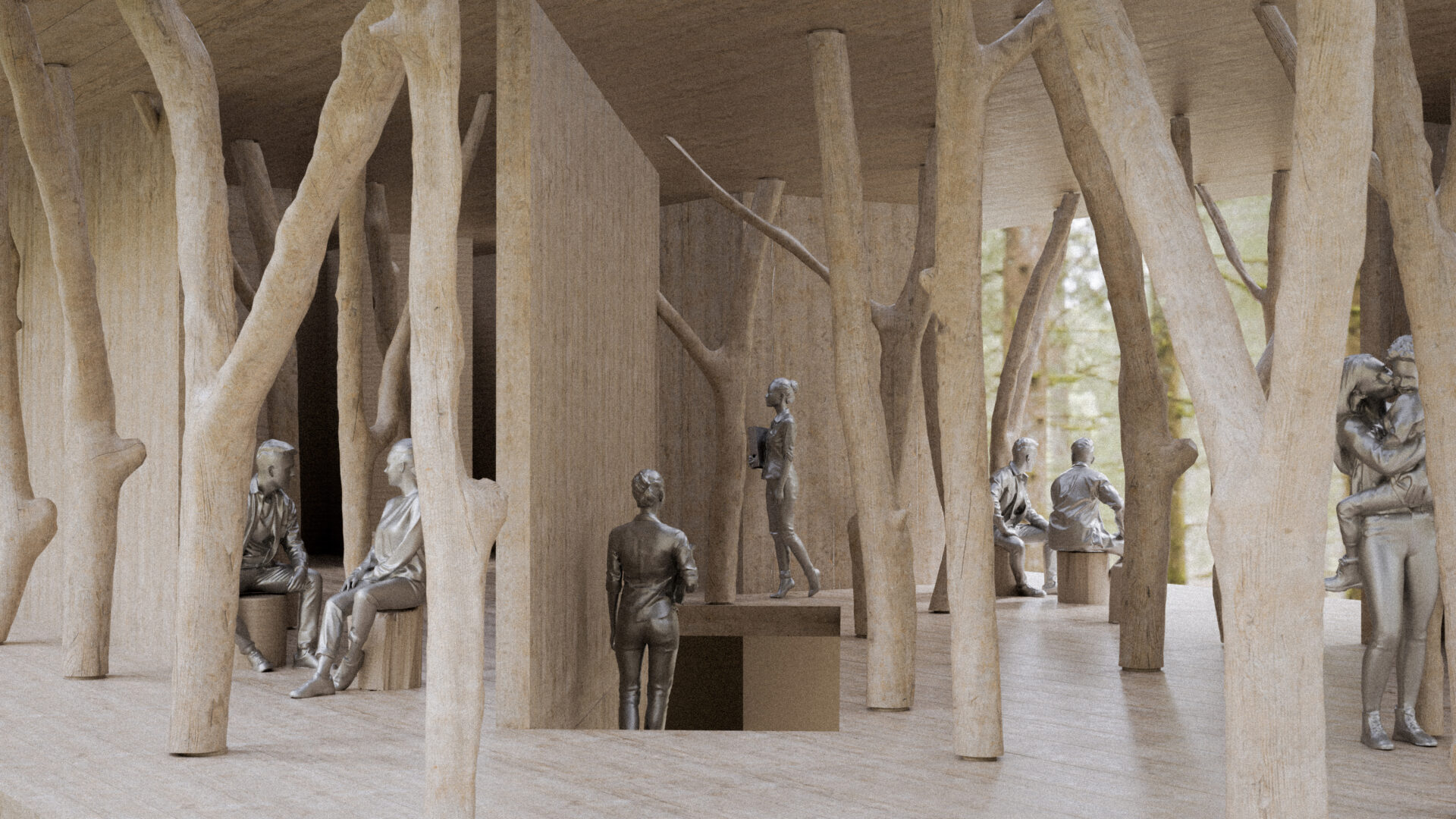
Project overview: TREE FORM is an architectural design and research project inspired by the intelligence of trees as spatial forms with inherent strength created though natural evolution. Branching tree forks are among the strongest parts of a tree, yet they are typically discarded as ‘waste’ by mainstream timber industries or pulped for disposable products. TREE FORM sequesters carbon, supports forest health and reduces forest ‘waste’ by transforming low-value branching trees into higher-value structures for architecture. TREE FORM embraces the diversity of trees in their varying natural forms as the lowest carbon-emitting structural system available. It imagines how architecture might move from the extractive, mass-produced standardized structures of the modern free plan to a regenerative tree plan where tree form becomes a collaborative partner in architecture that supports the daily lives of people.
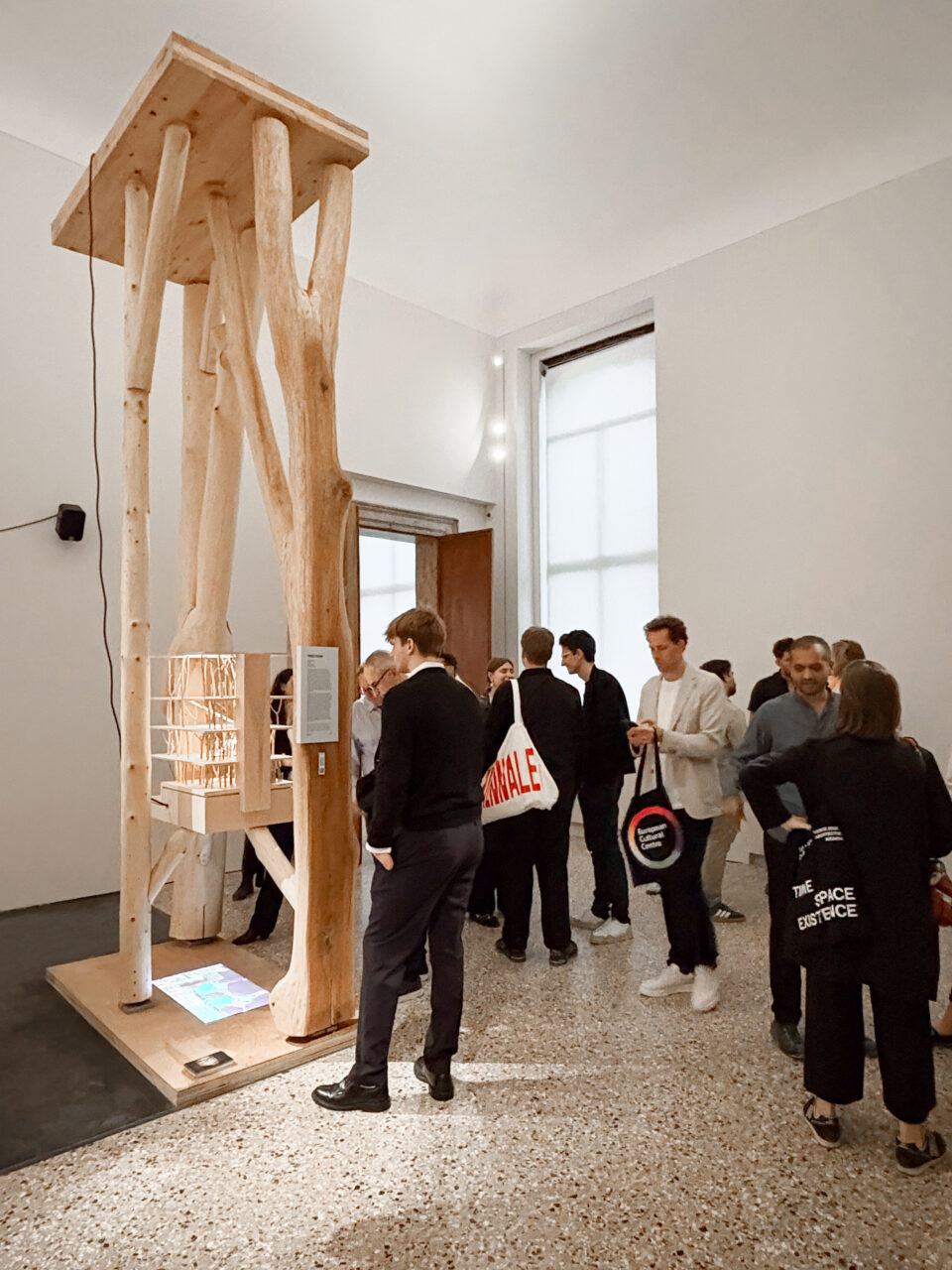
TREE FORM leverages a new, open-source computational and design workflow developed to understand the collective spatial and structural behavior of branching trees across a range of species and architectural building types. In May 2025 a prototype was tested and fabricated to demonstrate potential for scalable manufacturing.
For a given architectural form, a real time digital ‘twin’ model integrates tree species, geometry and finite element analysis. This enables architects to collaborate with scanned trees in digital inventories and to design with the wild character of trees in ways that are improvisational and precise. This use of ‘unmerchantable’ timber supports a value chain of relational benefits for forest regeneration and fire protection, people, and the communities they inhabit.
Project location: Boston, Massachusetts
Firm name: Kennedy & Violich Architecture, KVA Matx
Completion: 2025
Industry Partner: WholeTrees Structures
Jury comments: Innovative, well-rounded project that could solve real problems, combining conceptual clarity with rigorous research. Thoughtful proposal uses undesired tree forks as primary structure, sequesters carbon, supports forest health, and reduces waste while showcasing new ways to rethink wood with far-reaching architectural and environmental applications.
Images/Photographer: Kennedy and Violich Architecture
Partner: MIT Digital Structures Team Fabrication: WholeTrees Structures Structural: Engineering Ventures