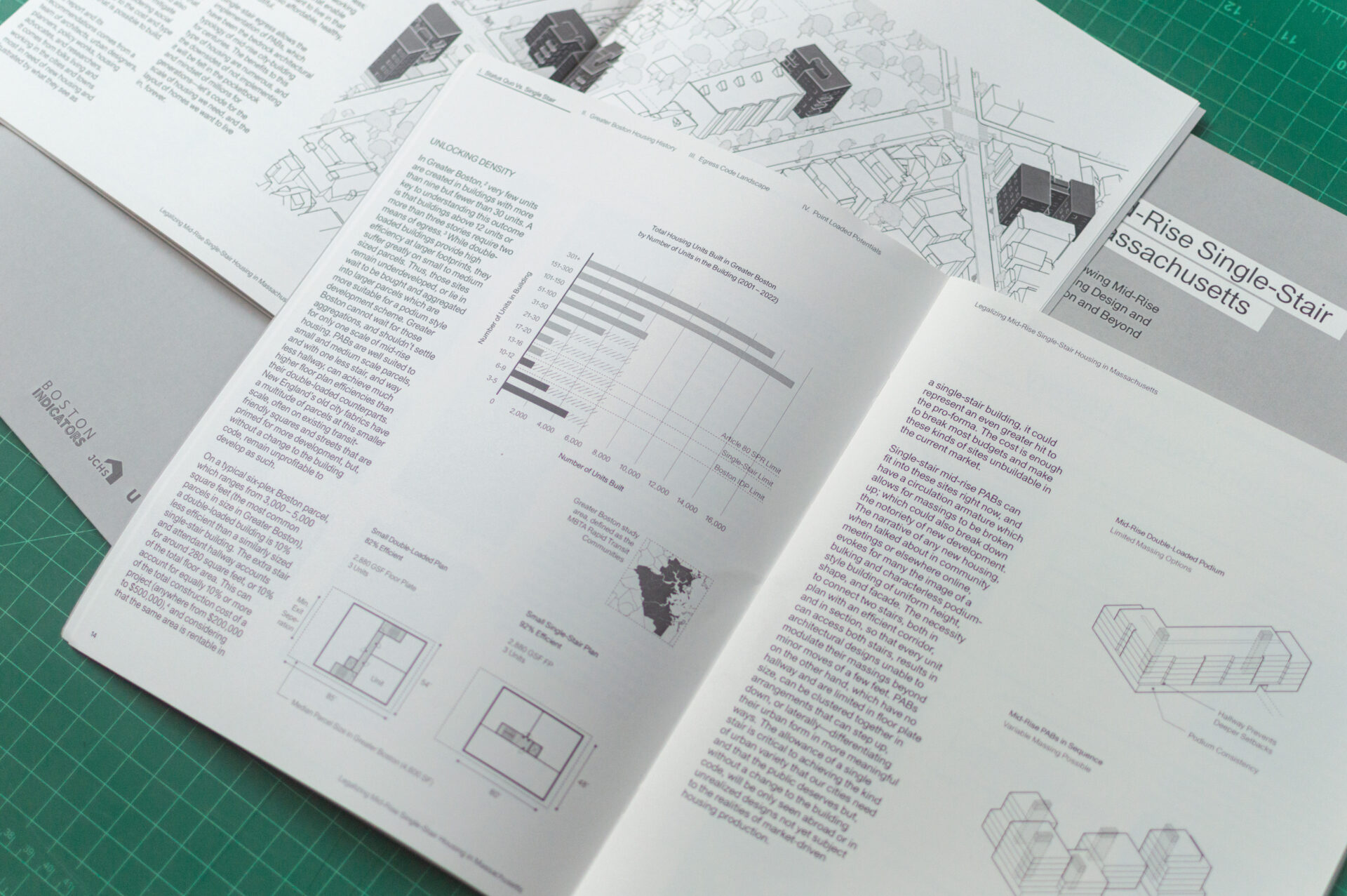
Project name: Legalizing Mid-Rise Single-Stair Housing in Massachusetts
Project overview:The Legalizing Mid-Rise Single-Stair Housing in Massachusetts Report is a design research study that applies architectural thinking to building code reform, focusing on how egress requirements shape the housing we can build. Commissioned to address Massachusetts’ acute housing shortage, the report analyzes a little-known barrier: the state’s requirement that residential buildings between three and six stories contain two enclosed staircases. While originally intended over 150 years ago to enhance fire safety, the rule now constrains design, increases costs, and leaves many small, transit-served parcels unbuildable.
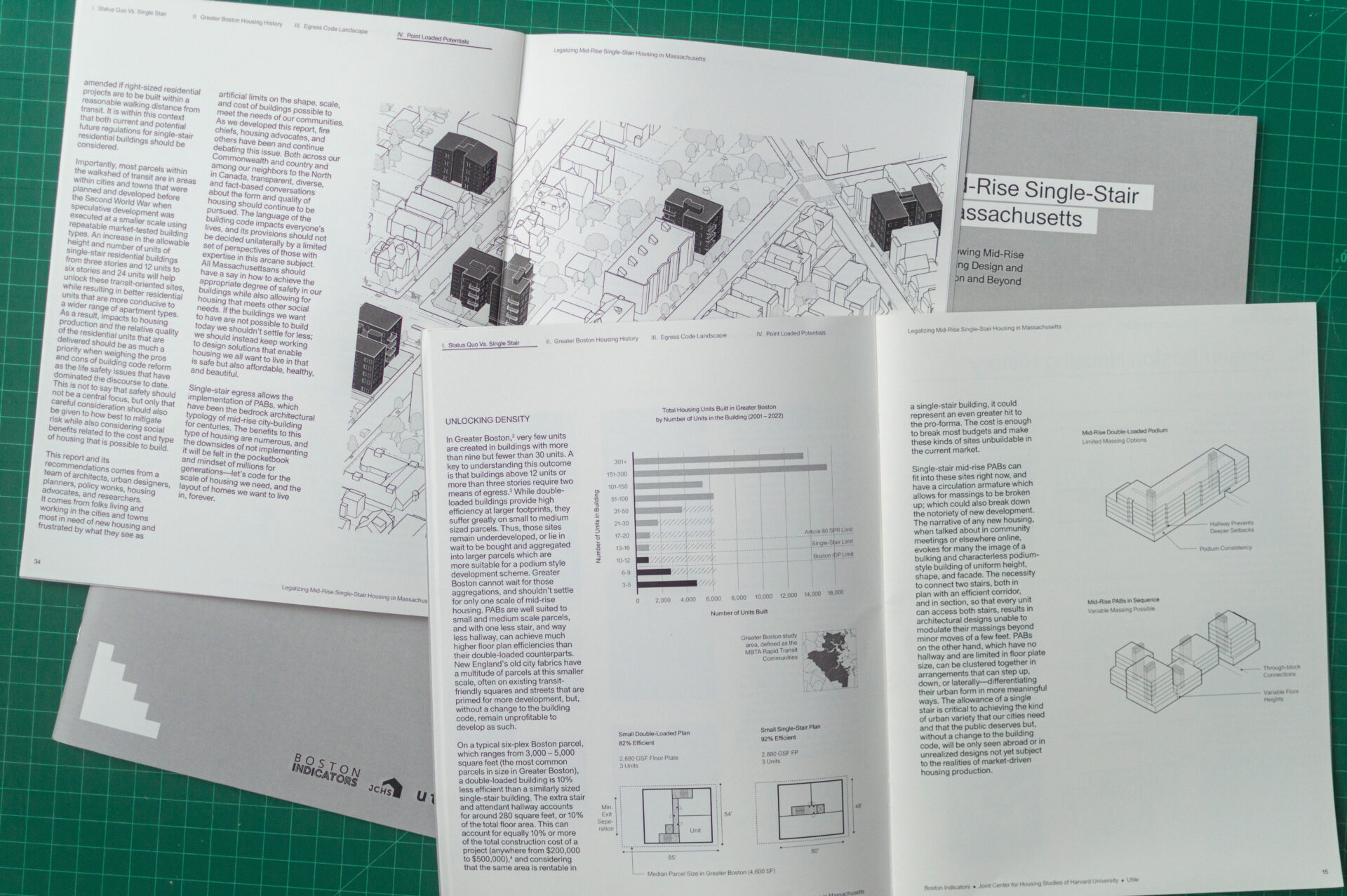
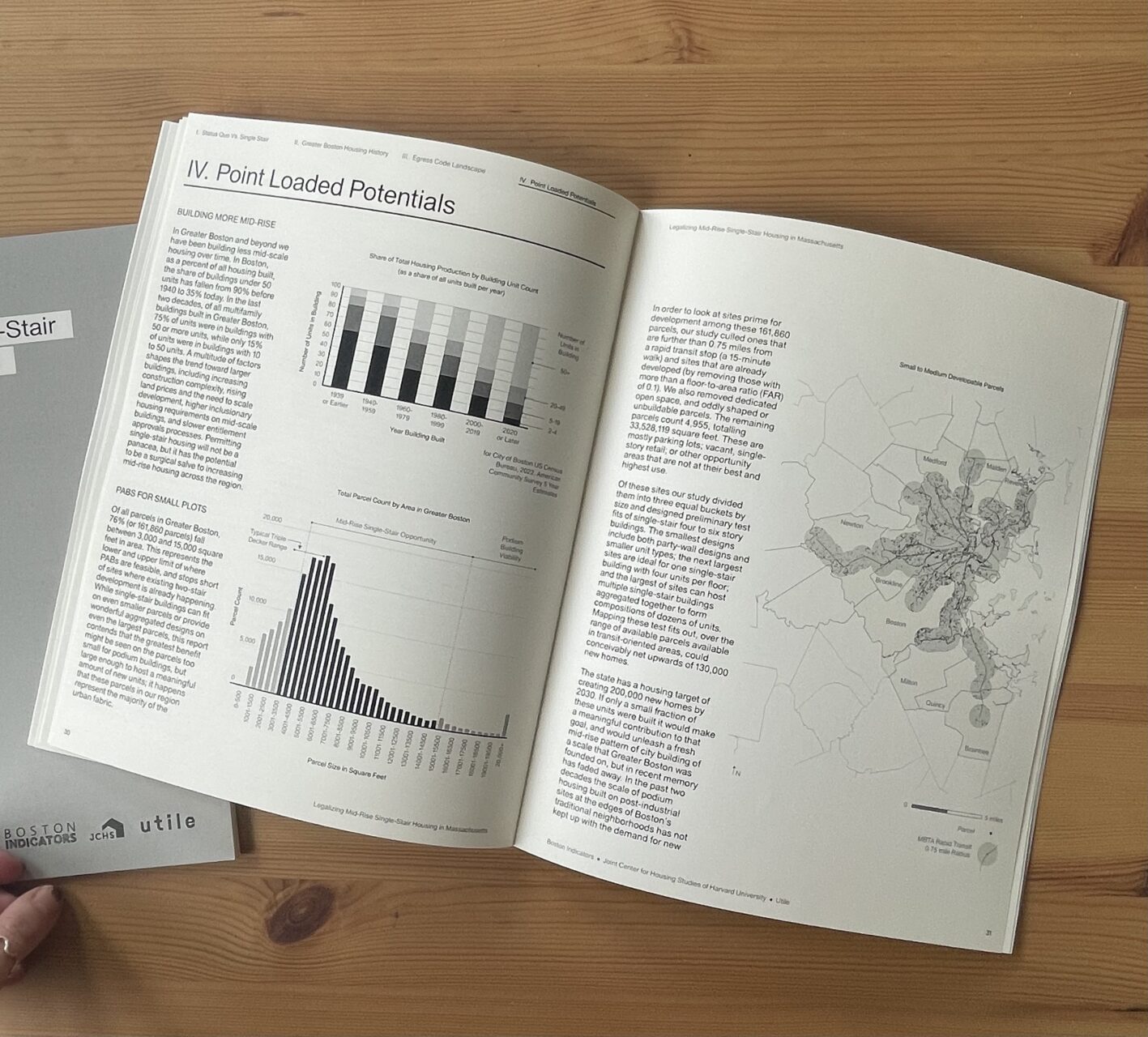
The report investigates our status quo development patterns, the benefits of single-stair buildings, the history of the building code, historic single-stair buildings in Greater Boston, egress codes around the world, and ends with an analysis and projection of the scale and shape of housing that could be unlocked on them if this reform were to be enacted.
Architectural drawings, diagrams, and data-based graphics are heavily used to illustrate the issue spatially. A digestible narrative flows alongside the drawings, providing context for the study, supporting evidence, and a clear story. The report proposes code changes that would allow single-stair buildings to be built up to six stories (from three), and have up to 24 units (up from 12). By treating building code as a design parameter, the work reframes a regulatory constraint as an opportunity for architectural and urban innovation. It offers a conservative, evidence-based pathway to diversify housing types, improve livability, and build more equitably, positioning Massachusetts as a model for policy-informed design solutions.
Project location: Massachusetts
Firm name:Utile
Jury comments:Thoughtful, well-represented report addressing the timely issue of affordable housing through single-stair housing reform. Clear, concise drawings present the code and design implications effectively, and the collaborative, research-driven approach advocates for innovative solutions. While thoroughly documented, the presentation is more technical and less publicly accessible than similar ADU work, limiting broader engagement.
Client:Joint Center for Housing Studies of Harvard University and Boston Indicators
Report: Utile
Funding: Boston Indicators
Editorial Advising: Joint Center for Housing Studies of Harvard University