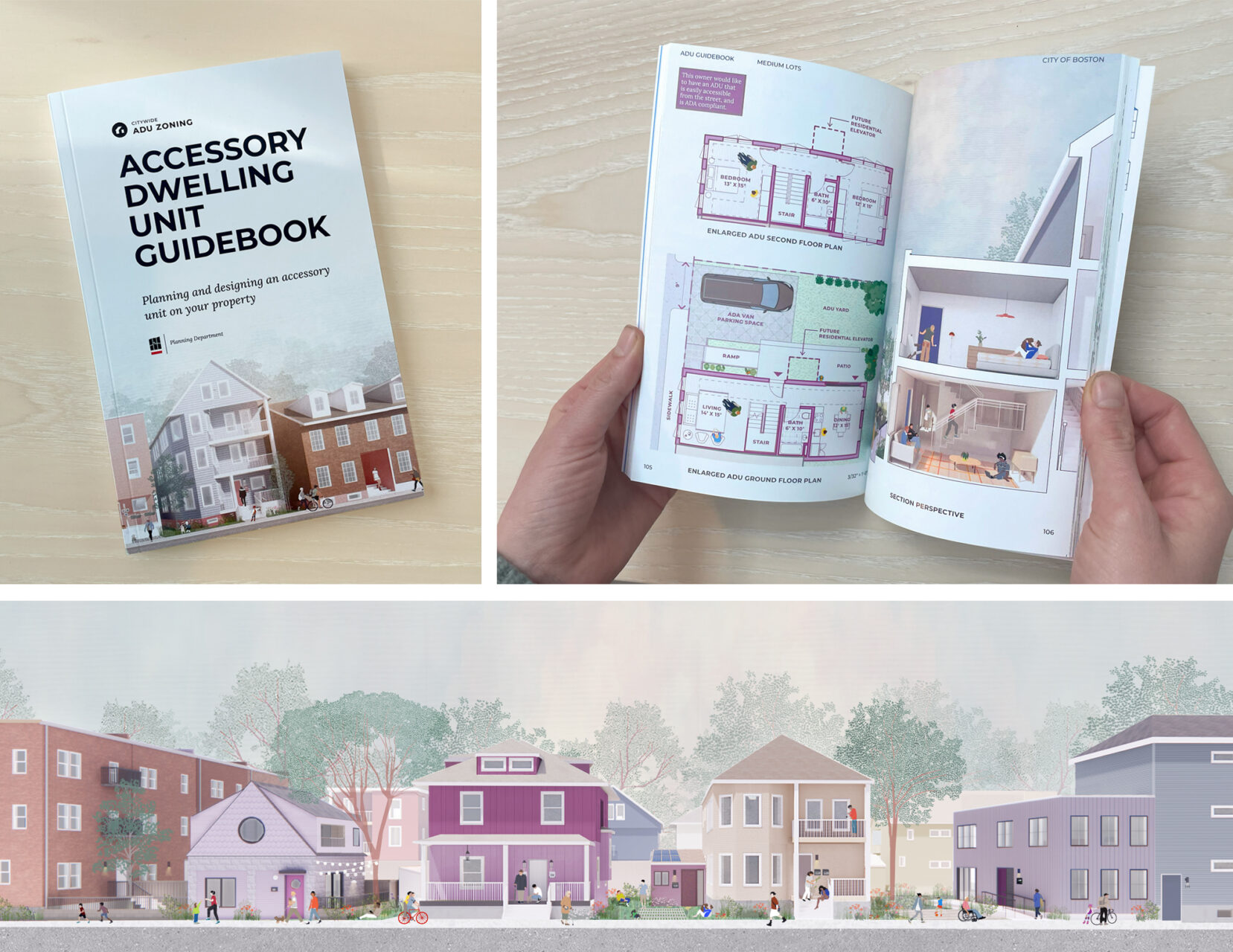
Project overview: As the housing affordability crisis has become dire, particularly in the Boston area, it has become clear that zoning reform can play a major role in addressing housing inequity and availability. While the need for zoning reform has become a more common discussion point for those outside of planning and design fields, communicating what zoning reform may look like to the broader public remains challenging.
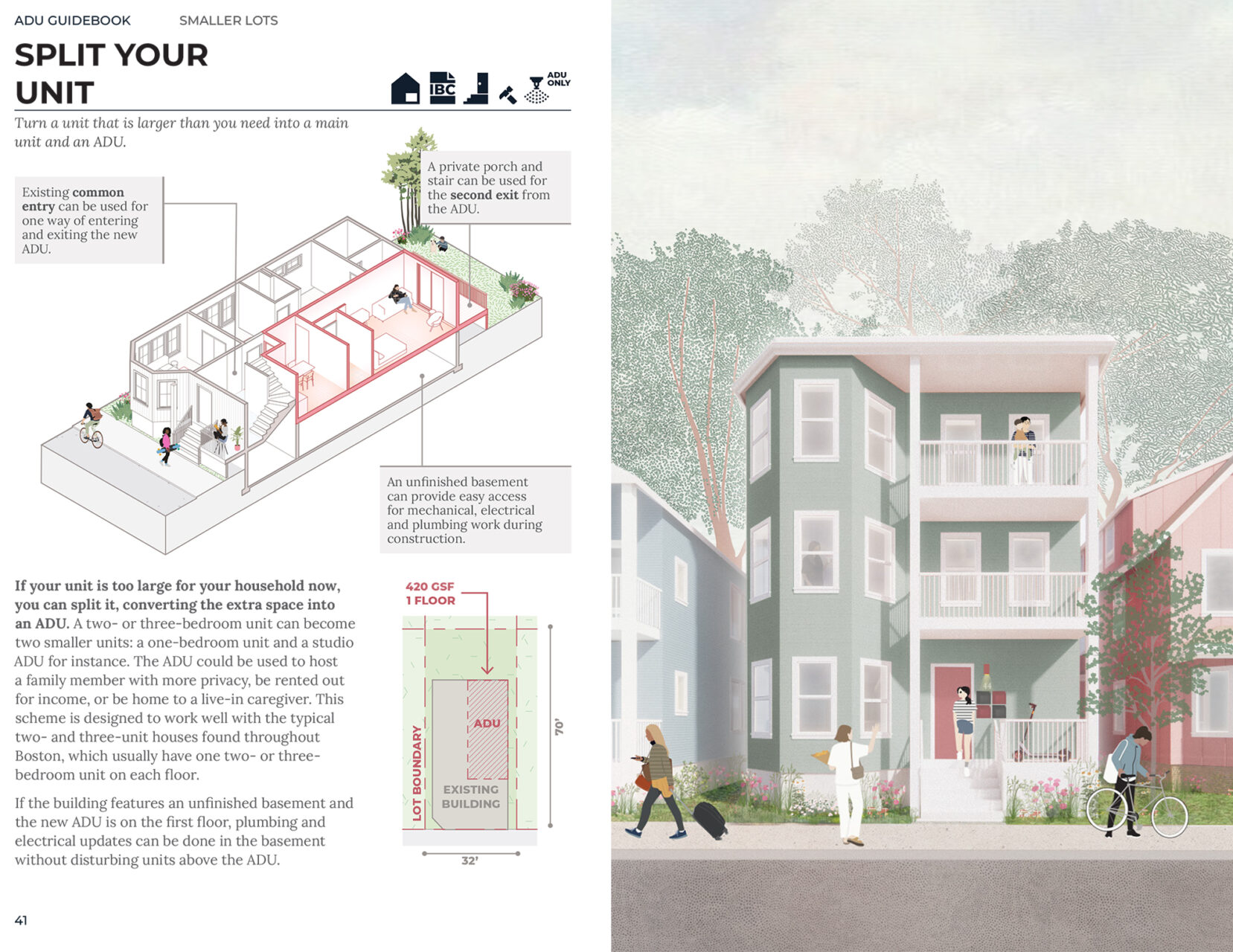
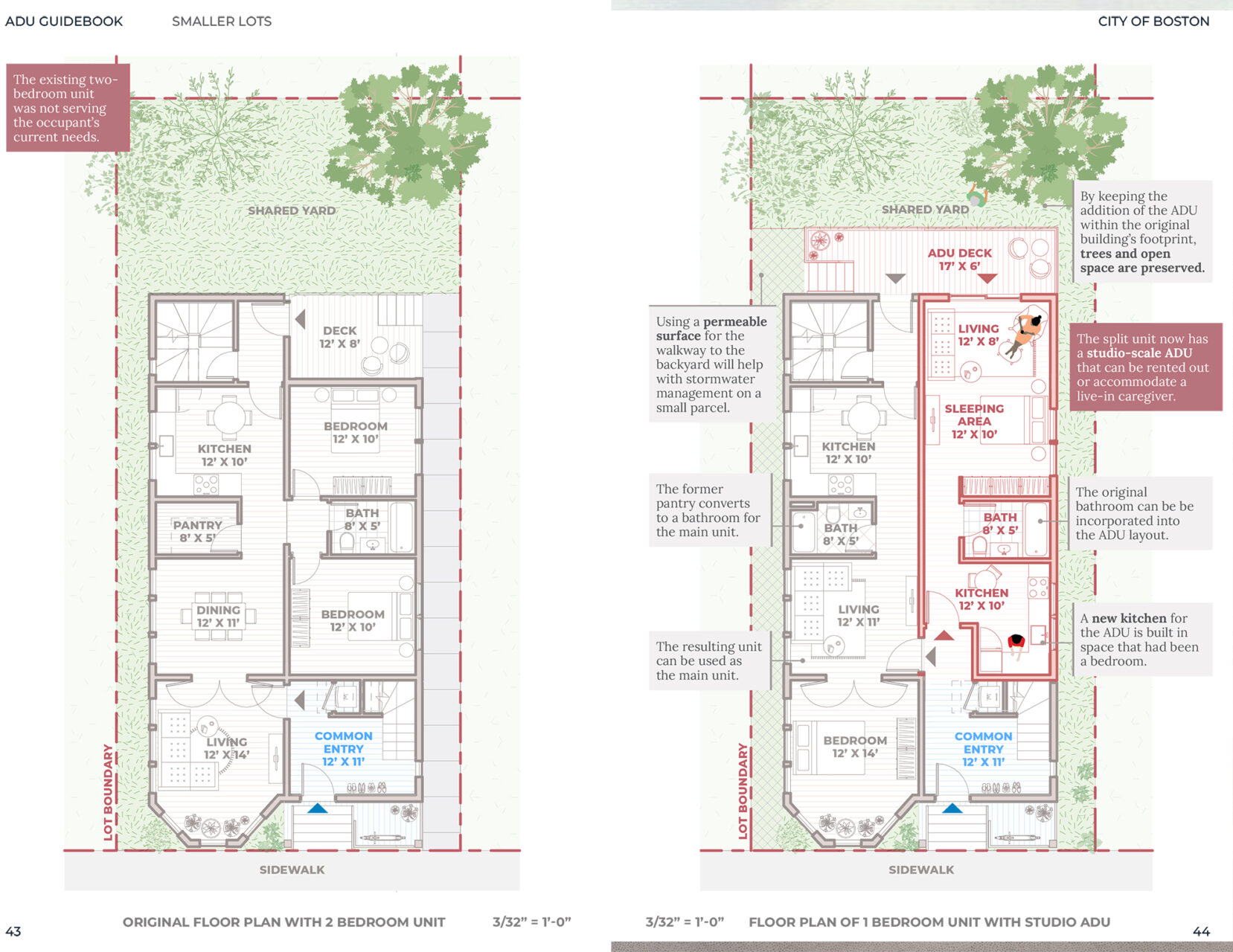
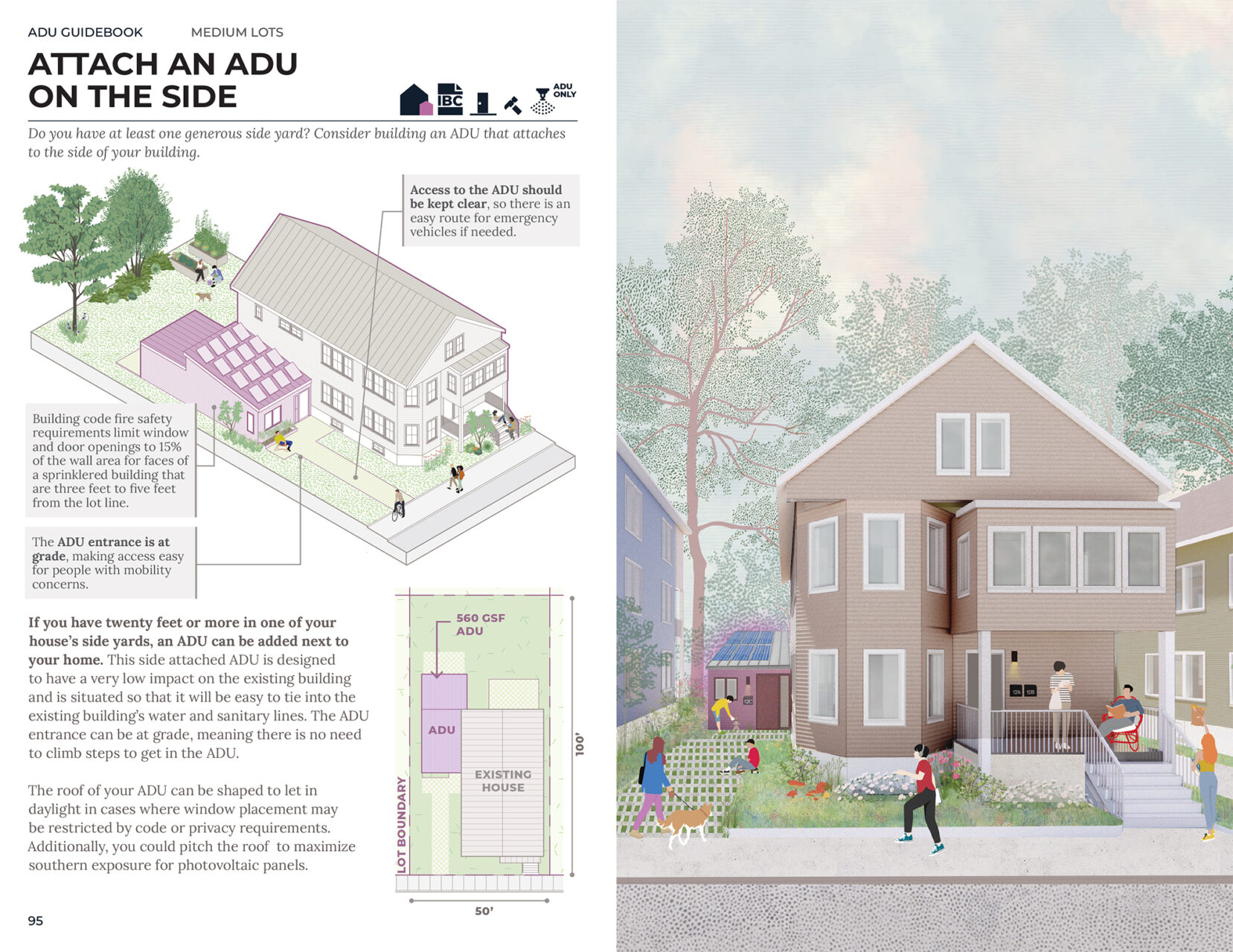
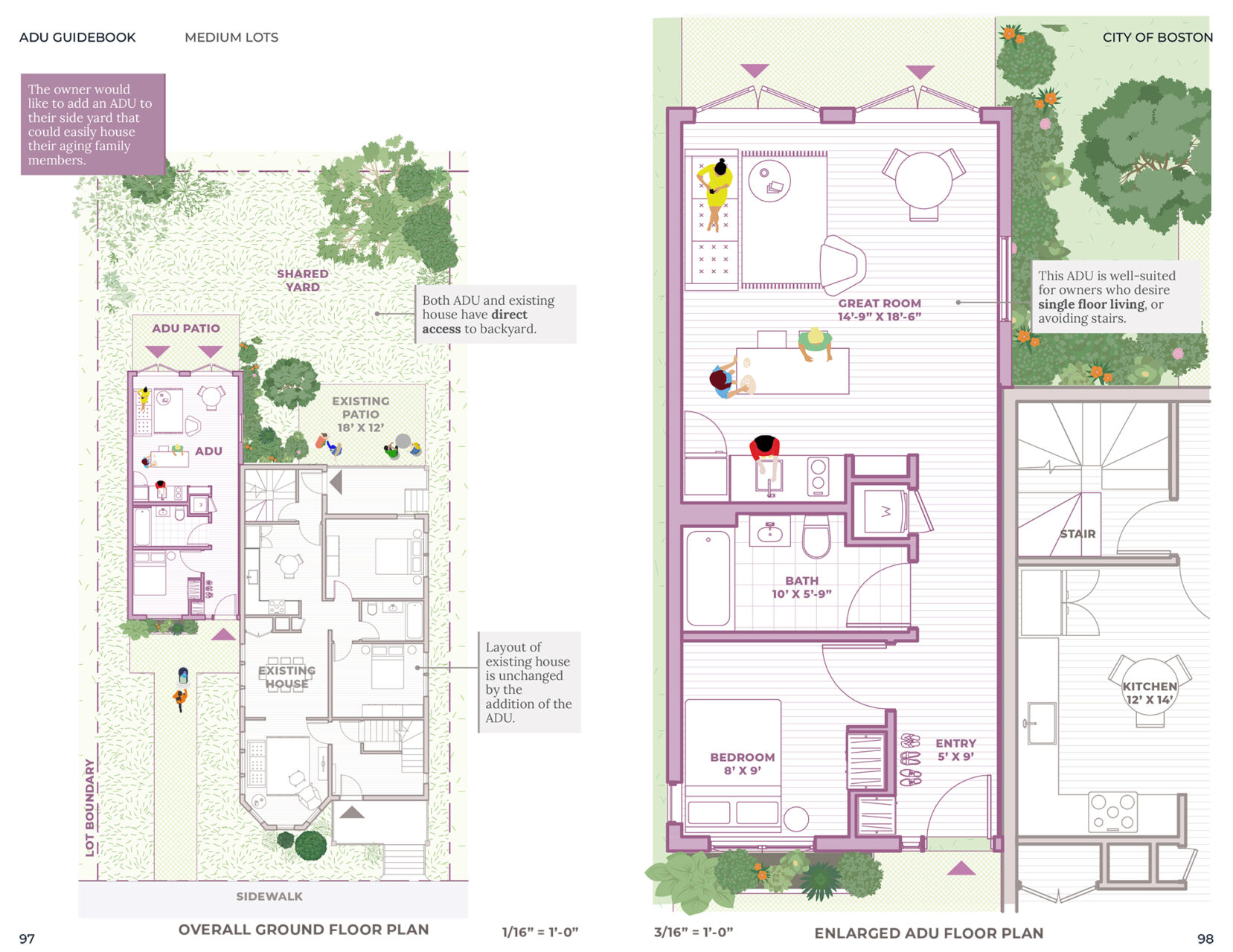
With Boston’s ADU Guidebook, we developed a visioning document based on Boston’s existing parcel sizes and small-scale residential building types that envisions what tactical, gentle density could look like in existing neighborhoods. The book uses 12 case studies to demonstrate how Accessory Dwelling Units could be incorporated into existing building types. The case studies were chosen after rigorous analysis of existing parcels and buildings to determine the scenarios that would be the most impactful to include. The style chosen for representing each case was a blend of classic Sears catalog level information, with an updated style of visualization that sought to downplay architectural specificity, while providing visual cues that would allow users to be able to picture what the various ADUs shown might be like in their own neighborhoods. By involving architects in both the development of policy and graphic communication of regulation and zoning intent, the ADU Guidebook makes zoning more transparent, equitable and accessible.
Boston’s ADU Guidebook addresses the challenges of working with aging housing in beloved neighborhoods and finding strategies for adding density that empower community members, enable the adaptation and preservation of existing buildings and generate right sized housing. The designs and imagery in the book were developed to be easy to understand by the general public, while communicating critical information in clear and simple language. By creating visualizations and accessible materials that shift how policy is understood, we aim to empower the public to shape their neighborhoods and participate in the creation of needed housing.
Project location: Boston, Massachusetts
Firm name: Outwith Studio, Neighbor Architects, Other Tomorrows
Client: Boston Planning Department
Jury comments: A collaborative and innovative project exploring the potential of ADUs in Boston. Beautiful, holistic, and publicly engaging representations clearly communicate complex zoning and design impacts, making the project a great tool. Could be strengthened by more focus on strategies, constraints, and context negotiation, but overall a thoughtful, socially responsible, and accessible approach.
Images/Photographer: Neighbor Architects Planner (Prime): Outwith Studio Graphic Designer: Other Tomorrow; Lee Moreau Building Code Consultant: SLS